

Spaces designed for growing minds
Our learning spaces connect furniture, materials and resources to age-specific goals. Teachers keep pathways clear, select accessible materials, supervise exploration and include books and displays reflecting children’s languages and families. Comfortable places for family conversations make caregivers part of the environment (NAEYC, 2020).
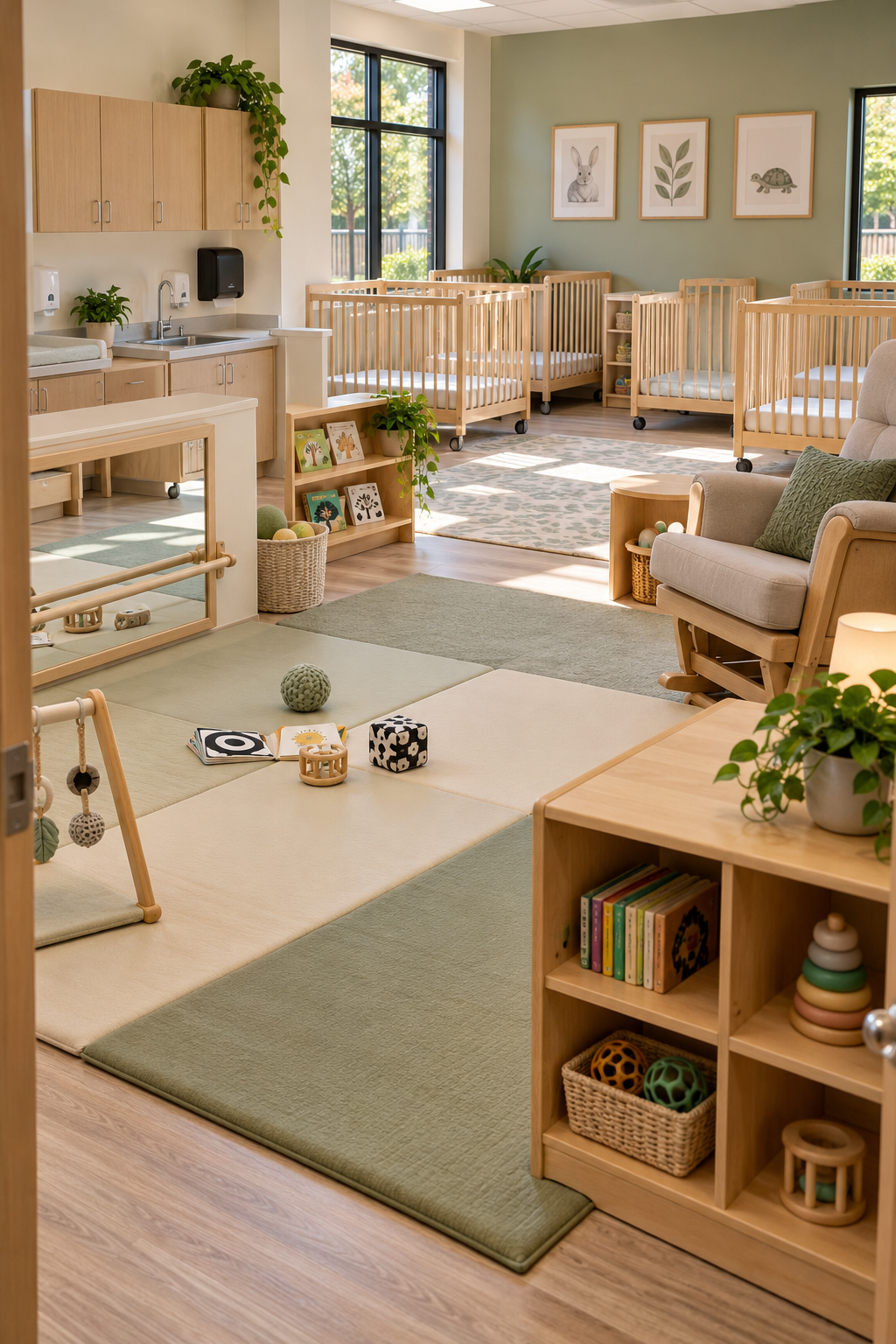
Infant room · Comfort & connection
Individual safe cribs provide designated sleep spaces. Feeding chairs support unhurried care; washable floor mats, low unbreakable mirrors, board books, and textured toys invite supervised exploration. Labeled storage keeps care supplies organized. Family photographs and home-language songs connect familiar relationships with the classroom.
Teachers would respond promptly to cries and babbles, narrate care, and adapt routines to each infant. These relationships support attachment, and safe sensory materials support Piaget’s sensorimotor learning (Follari, 2019). Caregivers would hear gentle songs and see responsive interactions. Family conferences would focus on routines, comfort, and emerging development.
Volunteer idea: Share a lullaby or help create a family-photo book.
At-home idea: Talk during a daily routine, pause and respond to your baby’s sounds.

Toddler room · Choice & exploration
Child-sized tables and chairs and sturdy low shelves let toddlers reach materials and practice independence. Large blocks, chunky crayons, pretend-play dishes, picture labels and a cozy reading corner support language, coordination and imaginative play. An open movement area provides space for music and active exploration.
Teachers offer two safe choices and model new skills with simple language. This connects Erikson’s autonomy stage with Vygotsky’s adult guidance (Follari, 2019). Families would see supported handwashing, sorting, and sensory play and hear adults naming feelings. Parent learning sessions address toddler language and transitions.
Volunteer idea: Prepare picture cards, contribute routine photos, or join a song activity.
At-home idea: Let your child choose which toys to put away first and describe the cleanup together.

Preschool room · Discovery & belonging
Art easels, child-height tables, accessible shelves, diverse picture books, magnetic letters, counting materials, science trays and blocks support literacy, mathematics and investigation. Pretend-play props encourage collaboration. Visual schedules clarify routines, and a quiet regulation area offers a place to pause with adult support.
Teachers connect materials to investigations: children count seeds, draw garden observations, dictate stories and test block structures. Piaget supports discovery; Vygotsky supports guided discussion; Bronfenbrenner encourages links with family experiences (Follari, 2019). Families would hear children explaining plans and see portfolios, small-group learning, conferences and project presentations.
Volunteer idea: Join a read-aloud, share a tradition, help with gardening, or attend a learning celebration.
At-home idea: Look for shapes on a neighborhood walk and draw a favorite.
Resource connection: Families help choose meaningful books and contribute ideas to classroom goals. Respectful partnerships guide our planning (NAEYC, 2020), and research on parent engagement informs our approach to social-emotional learning (Sheridan et al., 2010).