

Our early learning programs
Three learning spaces, one commitment: caring relationships, purposeful play and family partnership. Our fictional center uses a Head Start-inspired preschool model and Early Head Start-inspired infant/toddler care. Teachers connect goals, instruction and activities to each child’s stage, interests and strengths.
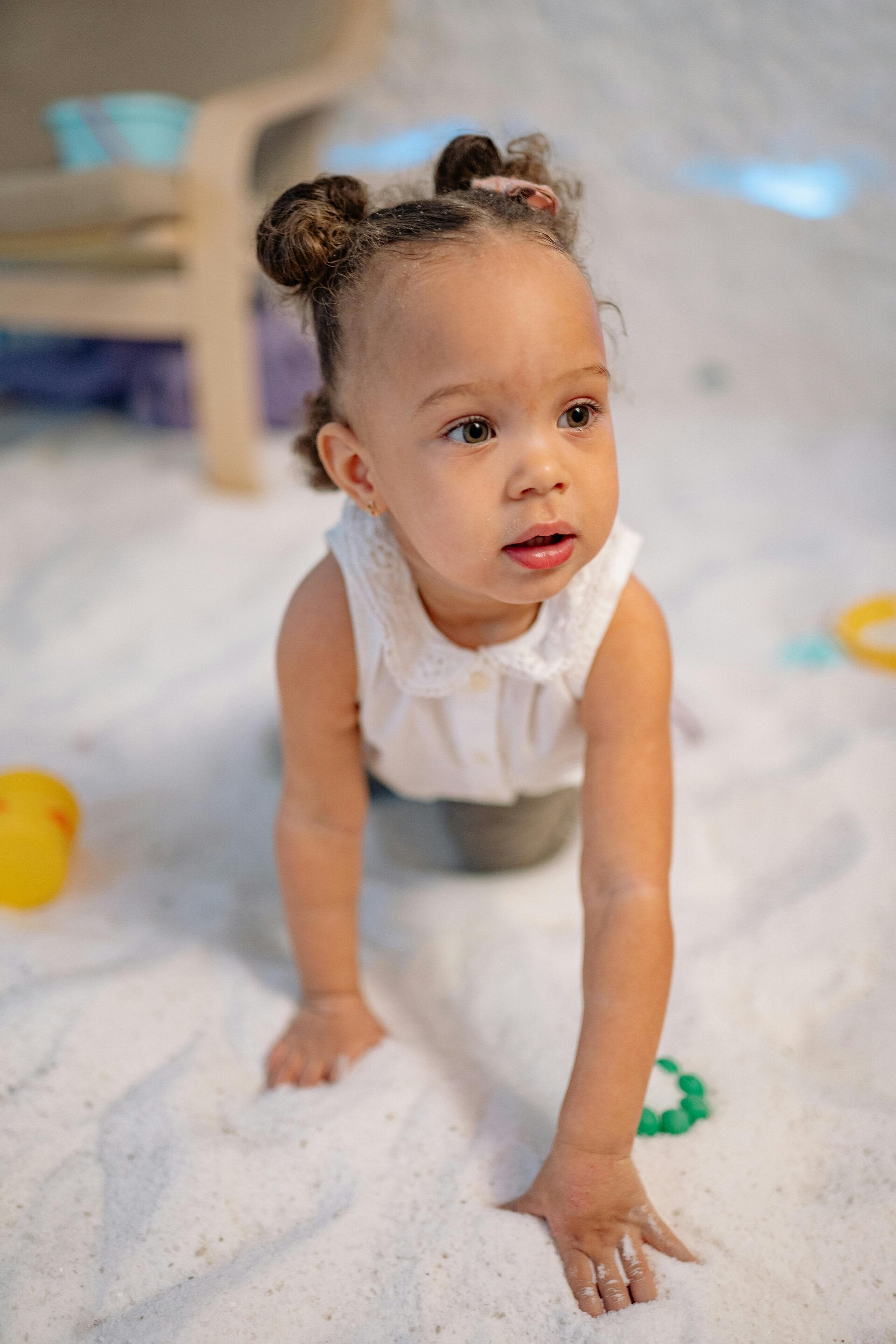
Little Discoverers · Birth–12 months
Curriculum and instruction: Infants build secure relationships, early communication, sensory awareness and coordination. Teachers follow babies’ cues, narrate routines, respond to babbles and provide supervised floor exploration. Activities include reaching for soft toys, looking at board books, listening to songs and practicing rolling or crawling at each baby’s pace.
Theory: Bowlby’s attachment theory supports responsive caregiving; Piaget’s sensorimotor stage supports learning through safe sensory exploration (Follari, 2019).
Materials and furniture: Individual safe-sleep cribs, comfortable feeding chairs, washable mats, low unbreakable mirrors, board books, textured toys and labeled storage.
Family volunteers: Share a home-language lullaby, create a family-photo display or join a scheduled story visit under staff supervision.
At home: Narrate a diaper change, pause for your baby’s response and imitate their sounds.
See and hear: Gentle singing, responsive conversations, individualized care routines and family discussions about feeding, comfort and milestones.

Busy Explorers · Ages 1–2
Curriculum and instruction: Toddlers develop vocabulary, mobility, independence and emotional expression. Teachers model short phrases, offer safe choices and guide play. Children stack large blocks, sort big objects, move to music, wash hands with help and explore a supervised sensory station.
Theory: Erikson’s autonomy stage encourages safe independence; Vygotsky’s guided learning supports new skills with adult assistance (Follari, 2019).
Materials and furniture: Child-sized tables and chairs, low shelves, large blocks, chunky crayons, pretend-play dishes, picture labels, a cozy book corner and an accessible movement area. Materials avoid choking hazards.
Family volunteers: Share songs, contribute routine photographs, prepare activity cards or attend workshops about language and big feelings.
At home: Offer two cleanup choices and name actions while working together.
See and hear: Toddlers saying “help,” adults naming emotions, transition songs, sensory play and family check-ins about emerging skills.

Ready-to-Grow Learners · Ages 3–4
Curriculum and instruction: Preschoolers develop oral language, early literacy, counting, friendship and problem-solving. Teachers use play centers, read-alouds, open questions and small groups. Children count garden seeds, draw observations, dictate stories and work together on building challenges.
Theory: Vygotsky supports guided conversation and peer learning; Piaget supports active discovery; Bronfenbrenner connects family experiences with classroom topics (Follari, 2019).
Materials and furniture: Art easels, child-height tables, diverse picture books, magnetic letters, counting materials, science trays, pretend-play props, blocks, visual schedules and a quiet regulation space.
Family volunteers: Read aloud, share traditions, help with gardening, join learning celebrations or set goals during conferences.
At home: Find shapes on a neighborhood walk, describe them and draw a favorite.
See and hear: Children explaining ideas, negotiating play roles, teachers asking “How could we test that?”, portfolios, family conferences and short project presentations.